Why Thickness Matters
Thickness does two jobs: it sets how substantial the shelf looks, and it sets how much room there is inside for a strong hidden support.
A floating shelf hides its support inside the wood, so the shelf has to be thick enough to hold it. A thicker shelf also bends less under the same load. That is why thickness is chosen with the load in mind, not just the look.
Thickness by Room and Use
Light decor shelves can be slim, everyday dish shelves need more thickness, and statement shelves beside a fireplace often match the mantel's chunkier profile.
| Room and use | Typical thickness range | Why |
|---|---|---|
| Decor shelf, frames and small objects | About 1 1/2 to 2 inches | Light load; a slim, modern look |
| Bathroom or bedroom shelves | About 1 1/2 to 2 inches | Light to medium loads |
| Kitchen shelves for dishes | About 2 to 3 inches | Heavier loads and a larger hidden support |
| Shelves beside a fireplace | About 2 to 3 inches | Balance the mantel visually |
| Statement or rustic shelves | 3 inches and up | Chunky beam-like profile |
Common market ranges for solid wood floating shelves; the right thickness for your shelves depends on depth, length and load. Every Chava Grain & Beam by Chava Home Design shelf is 100% custom, so its thickness depends on your project and your personal taste.
Thickness and Depth Work Together
Deeper shelves need more thickness: depth adds leverage on the support, and thickness gives the support room to resist it.
| Shelf depth | Common use | Thickness tendency |
|---|---|---|
| Shallow, about 6 inches | Picture ledges, spices | Slim works |
| Medium, about 8 to 10 inches | Glasses, mugs, books | Medium |
| Deep, about 10 to 12 inches | Dinner plates, serving pieces | Thicker, with a stronger support |
For the forces behind this, read about how much shelves hold.
Thickness and the Look of the Room
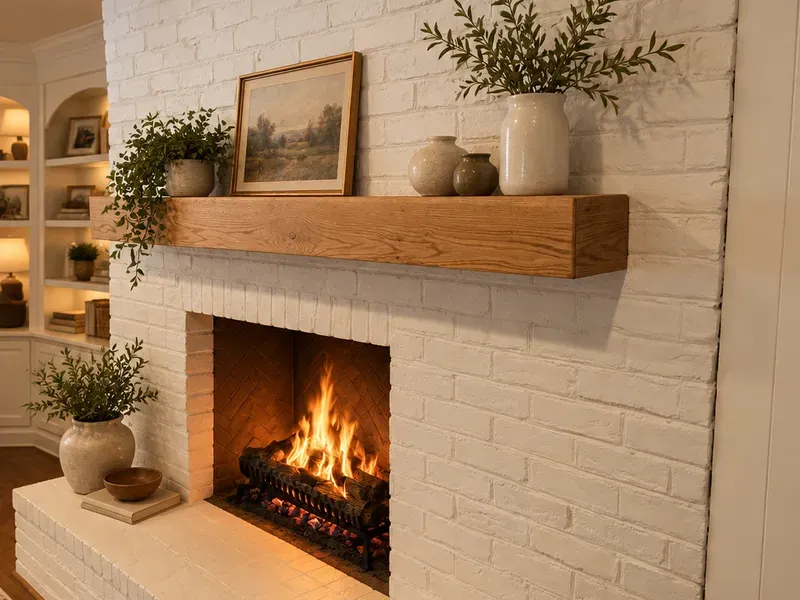
Thin shelves read modern and light; thick shelves read warm, solid and rustic, and they echo ceiling beams and a beam mantel.
Proportion is the rule. Shelves next to a thick beam mantel look best a little thinner than the mantel but clearly substantial. In a modern kitchen with slab cabinets, a slimmer shelf fits better. If your room has ceiling beams, shelves in the same wood with a generous thickness tie everything together.
Shelves Beside the Fireplace
Fireplace alcove shelves should relate to the mantel: same wood and stain, and a thickness that looks like part of the same family.
Matching thickness across both sides matters even more than the exact number. See floating shelves next to the fireplace for layout rules.
Common Thickness Mistakes
Three mistakes come up most: shelves too thin for the load, shelves too thick for a small room, and mismatched thicknesses on the same wall.
- 1
Too thin for dishes.
A slim shelf full of plates bends and leaves little room for the support.
- 2
Too chunky for a small wall.
Thick shelves can overwhelm a short wall or a narrow alcove.
- 3
Mixed thicknesses on one wall.
Shelves on the same wall, or both sides of a fireplace, should share one thickness.
- 4
Choosing thickness before depth and load.
Decide what the shelf holds first; thickness follows.
Thicker shelves use more wood, so thickness also moves the price, along with the wood species. Read what custom shelves cost to see how.
Frequently Asked Questions
Short, direct answers to the questions homeowners ask most about floating shelf thickness.
How thick should a floating shelf be?
Common solid wood ranges are about 1 1/2 to 2 inches for light decor, about 2 to 3 inches for everyday dishes and 3 inches and up for statement or rustic shelves.
How thick should kitchen floating shelves be?
Kitchen shelves for dishes are usually about 2 to 3 inches thick, which leaves room for a larger hidden support under heavier loads.
Do deeper shelves need to be thicker?
Yes. Depth adds leverage on the support, and extra thickness gives the support room to resist it, so deep shelves for plates are built thicker.
Should shelves beside the fireplace match the mantel?
They should look like the same family: the same wood and stain, a little thinner than a thick beam mantel, and the same thickness on both sides.
Are thicker floating shelves stronger?
Generally, yes. A thicker shelf bends less under the same load and has more room inside for a strong hidden support.
Does shelf thickness change the price?
Yes. Thicker shelves use more wood, and the wood species you choose changes the price as well.
What thickness do Chava Grain & Beam by Chava Home Design shelves come in?
There is no standard size: every shelf is 100% custom, so its thickness depends on your project and your personal taste. We help you choose it at the free visit.