Start With What Already Has Color
A beam stain is never chosen alone: it has to work with the floors, the cabinets, the trim and the ceiling paint that are already in the room.
Floors are usually the largest wood surface, so they lead, whether they are white oak floors, darker hardwood or tile. Cabinets come next in kitchens and open plans. White or painted trim and the ceiling color set the background the beams will sit against. Before looking at any sample, note the color and undertone of each of these.
Undertone Matters More Than Darkness
Two browns can be equally dark but one warm (red, orange or yellow) and the other cool (gray or green). A warm wood stain next to cool gray floors looks off even when the darkness is right. Compare undertones first, then darkness.
Beam Stain Options by Floor Color
Beams can match the floors or contrast with them; what fails is a near-match that is close but not quite.
| Your floors | Match option | Contrast option | Avoid |
|---|---|---|---|
| Light natural oak | Natural or clear-coated white oak | Medium walnut or a dark brown stain | Orange-toned mid browns |
| Mid-tone brown | The same stain on the same species | A clearly darker brown | A shade just slightly off the floor |
| Dark espresso | The same dark tone, in tall rooms | Natural oak or a light warm stain | Dark beams on a low, dark room |
| Gray or whitewashed | Gray-toned or weathered stain | Natural or warm wood for contrast | Red or orange undertones |
| Tile or stone | Pick from cabinets or trim instead | Warm wood to soften the stone | Matching the grout |
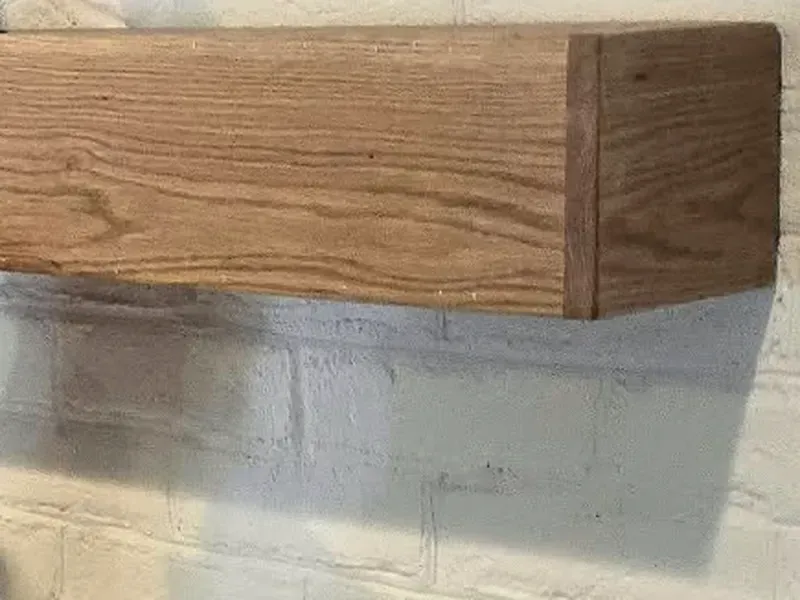
Rustic textures change the result: rough-sawn wood absorbs more stain and looks darker than smooth wood with the same color. See rustic and smooth beam finishes side by side.
The Wood Under the Stain Changes the Color
The same stain looks different on different species, because each wood has its own base color and grain that show through.
Oak's open grain catches stain and shows a strong pattern; maple's tight grain can take stain unevenly; pine can blotch without a conditioner; walnut is often left natural. That is why we always test stain on the actual species of your beams. Our guide to wood species compared shows each one's base color.
Why Your Light Changes Everything
Wood color shifts with the light: north-facing rooms make stains look cooler, south- and west-facing rooms make them warmer, and lamps at night add more yellow.
| Light | Effect on stain | What to do |
|---|---|---|
| North-facing windows | Cooler, slightly grayer | Lean warmer than you think |
| South-facing windows | Brighter and warmer through the day | Check samples at midday |
| West-facing windows | Strong warm light in the afternoon | Check samples in late afternoon |
| Warm bulbs at night | Yellower and darker | Look at samples with your lamps on |
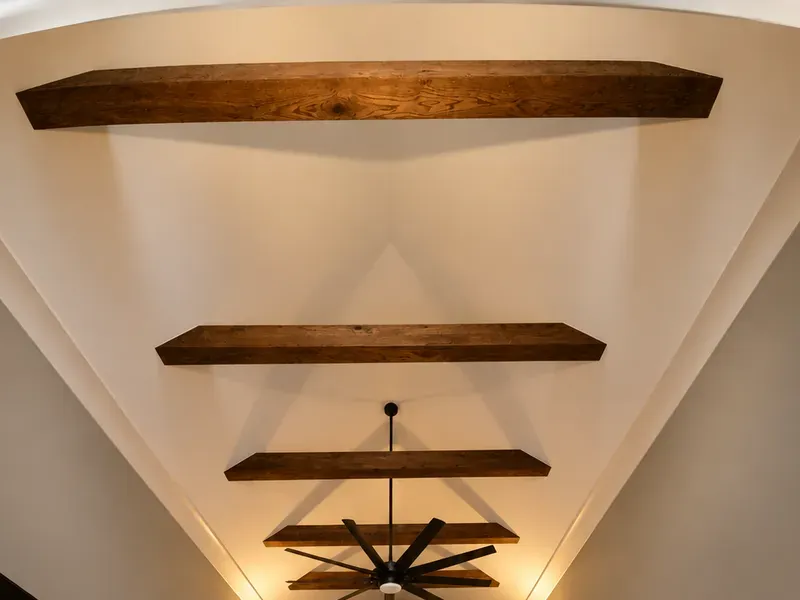
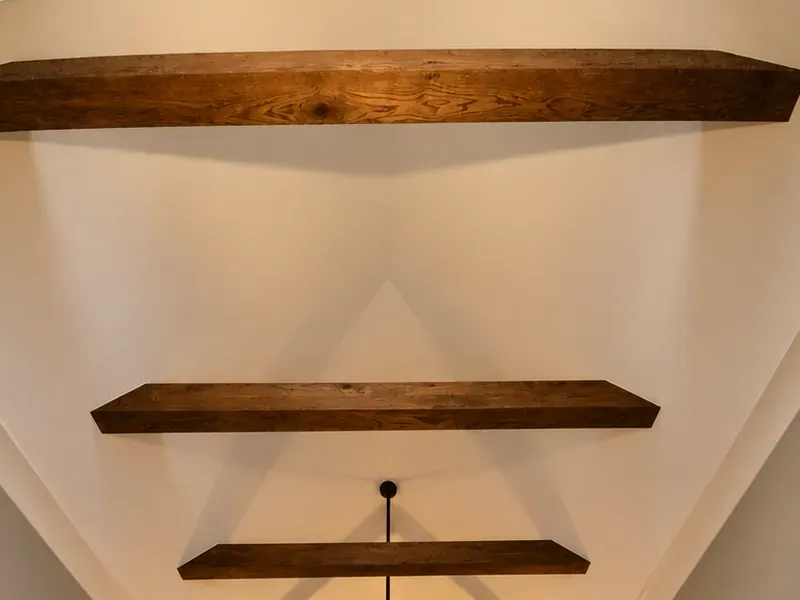
| Ceiling height | Beams overhead sit in shadow | Expect beams to read a bit darker than a sample in hand |
Our Sample Method in Five Steps
We choose beam color in your home, not in a store: real wood samples, held where the beams will go, compared next to your floors and cabinets in your light.
- 1
Bring samples on the real species.
Stain samples on the wood your beams will be made of, not a printed chart.
- 2
Hold them at ceiling height.
Color changes overhead, in shadow; we look up, not down.
- 3
Compare next to floors and cabinets.
One sample at a time against your largest wood surfaces.
- 4
Check in two lights.
Daylight now, and your lamps if you can, or a photo at night.
- 5
Approve one sample board.
The approved sample is the color we match in the shop.
One Stain for Beams, Mantel and Shelves
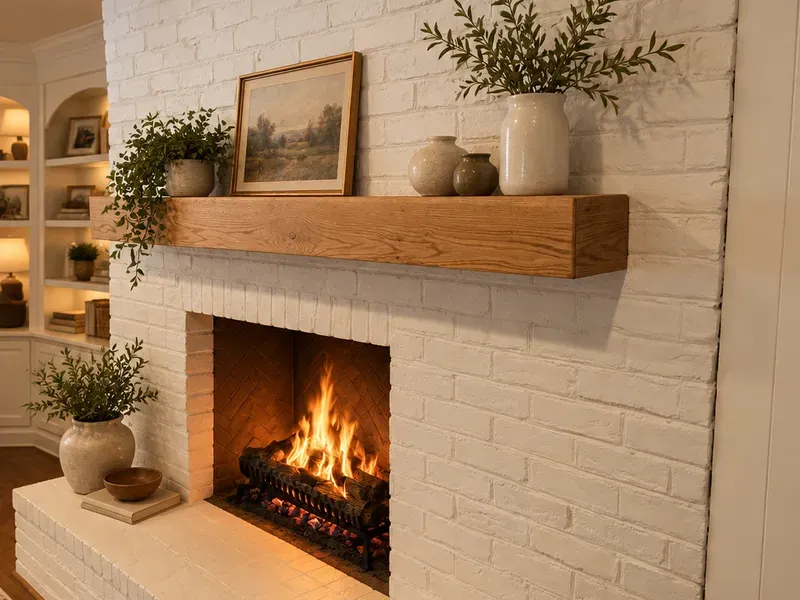
When beams, a mantel and shelves share one stain, the room reads as designed; when each has its own, it reads as collected.
If you plan more than one wood feature, choose the stain once, for all of them. Read matching beams and mantel for the rules that keep a set cohesive.
Frequently Asked Questions
Short, direct answers to the questions homeowners ask most about ceiling beam stain color.
What stain color should ceiling beams be with light oak floors?
Either natural or clear-coated white oak to match, or a clearly darker stain, such as medium walnut or a dark brown, for contrast. Avoid orange-toned mid browns.
Should ceiling beams be darker than the floor?
They can be. Beams should match the floors closely or contrast with them clearly; a near-match that is close but not quite is what looks wrong.
Do beams look darker on the ceiling than the sample?
Usually, yes. Beams overhead sit in shadow, so expect them to read a little darker than a sample held in your hand.
Does the wood species change the stain color?
Yes. Each species has its own base color and grain, so the same stain looks different on oak, maple, pine or walnut. We always test on the wood your beams will be made of.
How do you choose the beam stain color?
We bring stain samples on real wood to your home, hold them at ceiling height, compare them next to your floors and cabinets in your own light, and you approve one sample board.
Should beams, mantel and shelves have the same stain?
Usually, yes. One stain across beams, mantel and shelves makes the room read as designed; a different stain on each piece makes it read as collected over time.