The Short Answer by Room Style
White oak suits most modern and transitional homes, walnut suits rich traditional rooms, and pine or rough-sawn lumber suits rustic and farmhouse homes.
| If your room is | Start with | Also consider |
|---|---|---|
| Modern or Scandinavian | White oak | Maple |
| Transitional | White oak | Red oak with a medium stain |
| Traditional or formal | Walnut | Red oak with a dark stain |
| Farmhouse or rustic | Pine, character-grade | Rough-sawn lumber |
| Coastal | White oak, light finish | Maple |
| Painted or dark-stained look | Poplar | Pine |
Six Species Compared Side by Side
The six woods differ in color, grain, how they take stain and their cost, and those four traits decide most beam choices.
| Species | Natural color | Grain | Takes stain | Style | Relative cost |
|---|---|---|---|---|---|
| Pine | Pale yellow to amber, with knots | Soft, visible knots | Can blotch without a conditioner | Rustic, farmhouse | Lower |
| White oak | Light tan to golden brown | Tight and straight | Evenly | Modern, transitional, coastal | Higher |
| Red oak | Warm tan with a pink cast | Open and pronounced | Readily; grain shows through | Classic, traditional | Middle |
| Maple | Creamy white | Fine and smooth | Can take dark stains unevenly | Modern, clean | Middle |
| Walnut | Chocolate brown | Smooth and flowing | Usually left natural | Traditional, rich | Highest |
| Poplar | Cream with green streaks | Smooth and plain | Best painted or darkly stained | Painted or dark looks | Lower |
Relative cost compares the species with each other at the same size; your final price depends on all six cost factors.
Each Species in Detail
Each species has a personality on a ceiling: here is what to expect from each one, from the floor.
Pine
Pine is the classic rustic beam. Knots and warm color read well from far below, especially in character grade. Pine is soft, which doesn't matter on a ceiling, and it can blotch with stain, so we test first.
White Oak
White oak is the most versatile choice for today's homes: light, tight-grained and even under stain. It looks right with light floors and modern cabinets, and it ages gracefully.
Red Oak
Red oak's open grain gives a strong, traditional pattern and takes stain readily. It pairs well with the red oak floors found in many established homes.
Maple
Smooth, pale and quiet. Maple suits modern rooms with a clear or light finish; dark stains can look uneven on it.
Walnut
Deep brown without stain, walnut gives the richest look. On a low or dark ceiling it can feel heavy, so it shines in tall, bright rooms.
Poplar
Plain and smooth, poplar is the choice when beams will be painted or stained very dark, so its green streaks don't show.
Character-Grade and Rough-Sawn Lumber
Grade and texture can matter as much as species: character-grade lumber keeps knots and color shifts, and rough-sawn lumber keeps the saw texture.
Any of the species above can look rustic in character grade. Rough-sawn surfaces absorb more stain, so the same color looks darker. Pick the grade and texture together with the species.
Wood Choice on Tall and Vaulted Ceilings
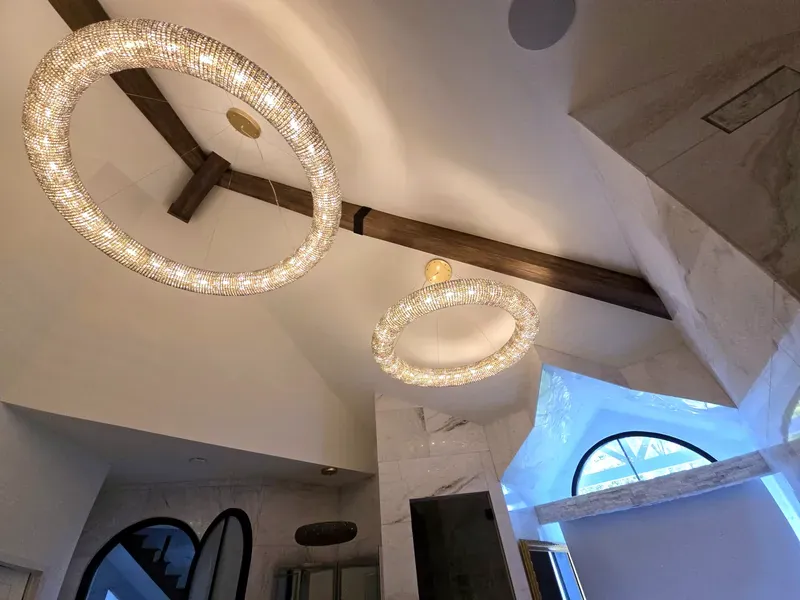
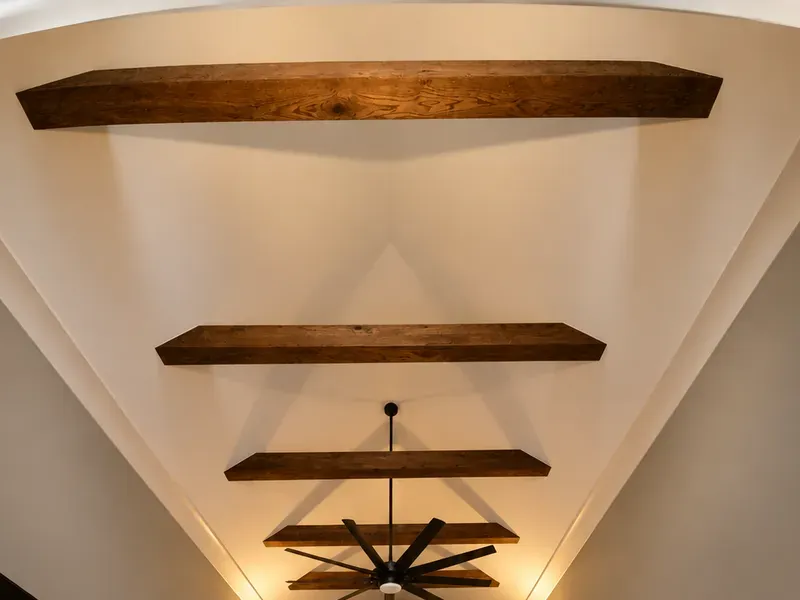
On tall ceilings, contrast and texture matter more than fine grain, because the beams are seen from far away.
Fine maple grain disappears at 20 feet; strong red oak grain, rough-sawn texture or a dark walnut tone against a light ceiling still reads. We build vaulted ceiling beams in any species, and recommend testing samples held overhead, not in hand.
Common Wood Choice Mistakes
Most wood regrets come from choosing a species for the wrong reason: from a photo, for a stain it doesn't take well, or for grain no one can see from the floor.
- 1
Choosing from a screen.
Wood and stain look different on a phone; judge real samples in your own light.
- 2
Picking maple for a dark stain.
Maple can take dark stains unevenly; oak takes them more predictably.
- 3
Paying for fine grain on a tall ceiling.
Fine grain disappears at 20 feet; contrast and texture still read.
- 4
Almost matching your floors.
A species close to, but not quite, your floors looks like a mismatch.
- 5
Forgetting rough-sawn texture.
Rough-sawn wood absorbs more stain, so the same color looks darker.
Why Real Wood at All?
Only real wood gives real grain, real texture and the option to refinish later; molded foam copies the look from a distance.
Every species here is real lumber. For the full comparison, read real wood vs foam beams. Once you choose a species, the stain is the next decision; see our stain color ideas.
Frequently Asked Questions
Short, direct answers to the questions homeowners ask most about the best wood for ceiling beams.
What is the best wood for ceiling beams?
For most modern and transitional homes, white oak. Walnut suits rich traditional rooms, and pine or rough-sawn lumber suits rustic homes.
Is pine good enough for ceiling beams?
Yes. Ceiling beams carry no traffic, so pine's softness doesn't matter, and its knots and warm color are ideal for rustic looks.
Which wood is best for a stained beam?
White oak and red oak take stain evenly and predictably. Maple and pine can need extra care to avoid blotching.
Which wood is best for painted beams?
Poplar. It is smooth and plain, and its color variation disappears under paint.
Should beams match my wood floors?
They should match closely or contrast clearly. A species that is almost, but not quite, the same as the floor usually looks like a mismatch.
What species do you offer?
Pine, white oak, red oak, maple, walnut and poplar, plus character-grade and rough-sawn lumber.